Michael V said:
SCIENCE said:
has…
… has this
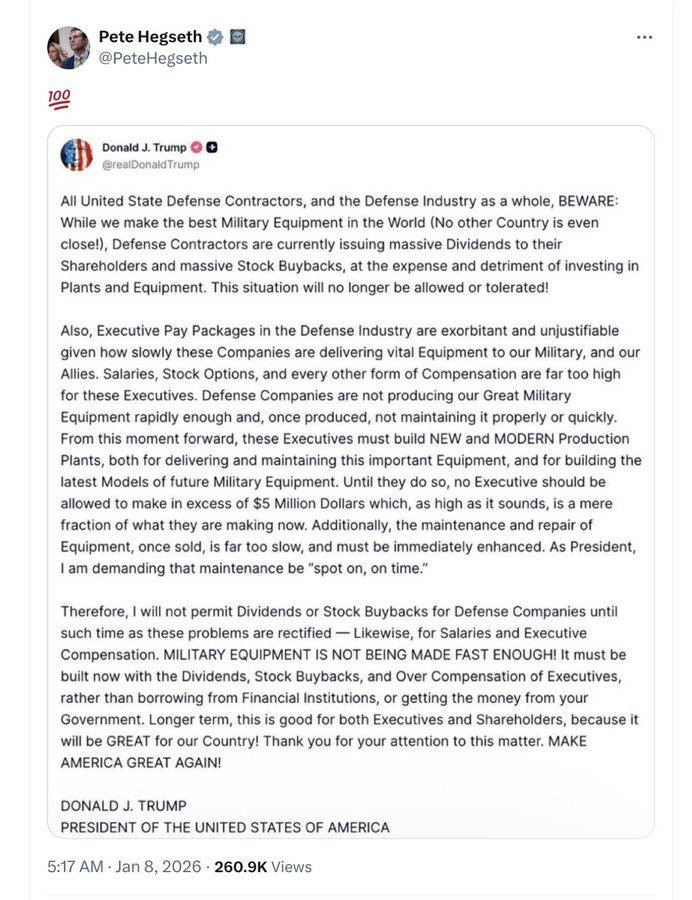
“this incredible thing last night… We have to do it again. We can do it again, too. Nobody can stop us”
kind of thing happened before
¿
Something… something… something… Iran… failed… Operation Eagle Claw…
¿ what about this incredible thing, that is being done again, has this kind of thing happened before ?
In 1936, after years of limitations imposed by the Versailles Treaty, military spending in Germany rose to 10% of GNP, higher than any other European country at the time, and, from 1936 onward, even higher than civilian investments. Hitler faced a choice between conflicting recommendations. On one side a “free market” technocratic faction within the government, centered around Reichsbank President Hjalmar Schacht, Minister of Economics Walther Funk and Price Commissioner Dr. Carl Friedrich Goerdeler calling for decreased military spending, free trade, and a moderation in state intervention in the economy. This faction was supported by some of Germany’s leading business executives, most notably Hermann Duecher of AEG, Robert Bosch of Robert Bosch GmbH, and Albert Voegeler of Vereinigte Stahlwerke. On the other side the more politicized faction favored autarkic policies and sustained military spending. Hitler hesitated before siding with the latter, which was much in line with his fundamental ideological tenets: social darwinism and Lebensraum’s aggressive policies. So in August 1936, Hitler issued his “Memorandum” requesting from Hermann Göring a series of Year’s Plans (the term “Four-Year Plan” was coined only later, in September) in order to mobilize the entire economy, within the next four years, and make it ready for war: maximizing autarchic policies, even at a cost for the German people, and having the armed forces fully operational and ready at the end of the four years period.
The year 1936 also represented a turning point for German trade policy. In September, Hjalmar Schacht was replaced by Hermann Göring, who was given the task to make Germany self-sufficient and able to wage war within four years. Measures enacted under Göring included slashing imports, instituting wage and price controls (with violations punishable by internment in a concentration camp), and restricting dividends to six percent on book capital. New strategic goals were introduced for the purpose of making Germany ready for war, including the construction of synthetic rubber plants, more steel plants, and automatic textile factories. Hitler called for Germany to have the world’s “first army” in terms of fighting power within the next four years and that “the extent of the military development of our resources cannot be too large, nor its pace too swift” and the role of the economy was simply to support “Germany’s self-assertion and the extension of her Lebensraum”. Hitler went on to write that given the magnitude of the coming struggle that the concerns expressed by members of the “free market” faction like Schacht and Goerdeler that the current level of military spending was bankrupting Germany were irrelevant. Hitler wrote that: “However well balanced the general pattern of a nation’s life ought to be, there must at particular times be certain disturbances of the balance at the expense of other less vital tasks. If we do not succeed in bringing the German army as rapidly as possible to the rank of premier army in the world … then Germany will be lost!” and “The nation does not live for the economy, for economic leaders, or for economic or financial theories; on the contrary, it is finance and the economy, economic leaders and theories, which all owe unqualified service in this struggle for the self-assertion of our nation”.
alleged