Date: 14/12/2025 17:12:17
From: Tau.Neutrino
ID: 2341401
Subject: Space Junk
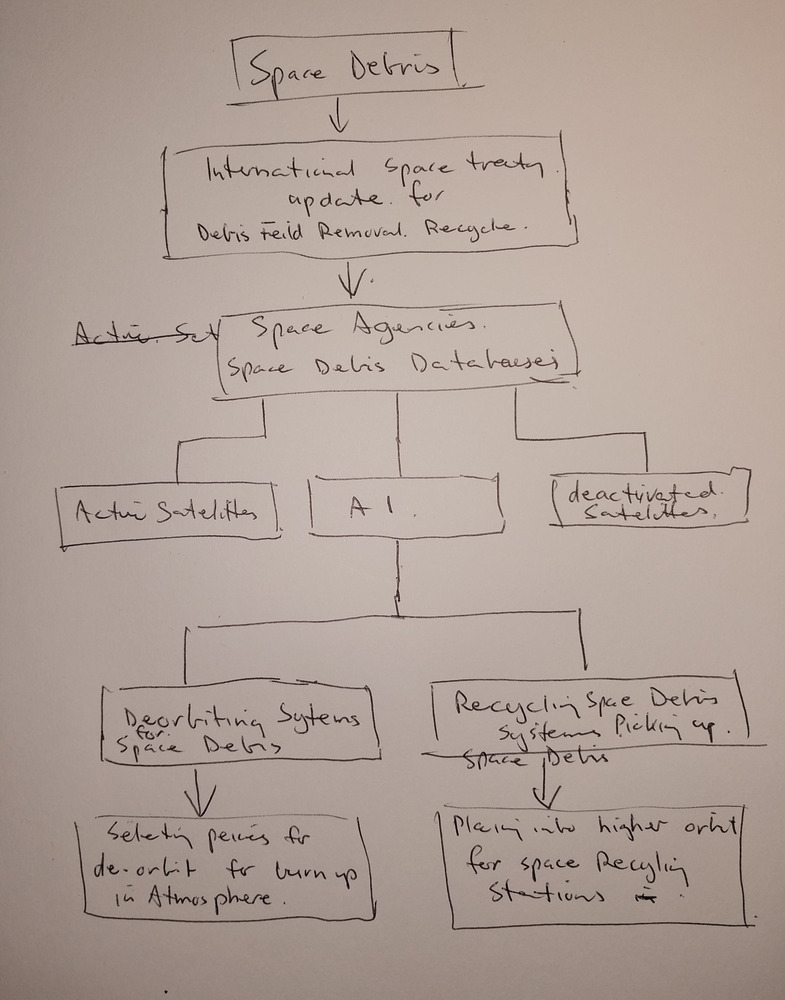
There’s around 10 ways to get rid of space junk
Active Removal Methods (For Large Debris)
- Robotic Arms/Claws:
Missions like ClearSpace-1 aim to use a robotic arm to grab defunct satellites, then de-orbit them.
- Nets: DART (RemoveDEBRIS mission) successfully tested a net to capture debris in orbit, slowing it for atmospheric re-entry.
- Harpoons:
A harpoon can spear debris to attach a tether, pulling it down.
- Magnetic Docking:
Companies like Astroscale are developing magnetic tugs that attach to satellites (with pre-installed docking plates) to move them.
- Space Tugs:
A “tug” spacecraft approaches, attaches, and maneuvers the debris into a lower orbit for controlled burn-up.
Passive & Future Methods
- Lasers (Ground-Based):
Lasers fired from Earth can ablate (vaporize) small parts of debris, creating thrust to nudge them into lower orbits where they burn up.
- ElectroDynamic Tethers (EDTs):
Long conductive tethers generate forces in Earth’s magnetic field to de-orbit satellites.
- Sponge Foam/Shields:
Large, thin shields or foam can slow down smaller particles, causing them to re-enter faster.
In-Orbit Servicing:
Refueling, repairing, or de-orbiting satellites using robotic systems, rather than just capturing them.
Mitigation (Preventing New Debris)
Design for Demise: Building satellites to burn up more easily on re-entry.
- Graveyard Orbits: Moving satellites to higher, unused orbits at end-of-life.
Active Debris Removal (ADR): Developing technology to remove existing, large, uncontrolled objects before they break into more pieces (Kessler Syndrome).
- Lasers in space pushing particles and debris down wards.